There is no single road from Tangier to Marrakech — and that is the beauty of Morocco.
Each route tells a different story: of coast and sea winds, of mountains and medinas, of caravans crossing time and desert light. At the end lies Marrakech, at the foot of the High Atlas — a city shaped by centuries of trade, where the pulse of the desert and the mountains meet.
For travellers planning their Morocco tour — whether a private journey or a small group tour of Morocco — the question is not which route is best, but which feels most like your Morocco.
The Coastal Route — Cities and Sea
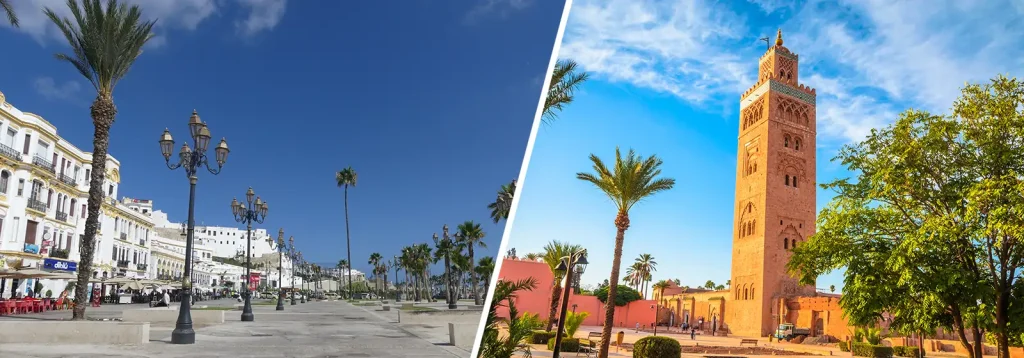
For those drawn to Morocco’s modern face, the coastal road travels close to the Atlantic from Tangier through Asilah, Rabat, and Casablanca, with the option to continue to Essaouira before turning inland to Marrakech.
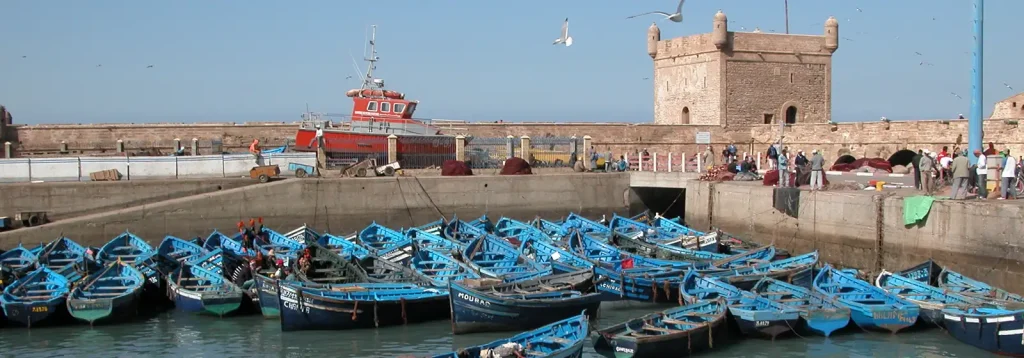
It is a route of open skies and Atlantic light — towns and cities shaped by trade, sea air, and outward gaze. Asilah reflects the Spanish colonial period yet remains distinctly Moroccan; Rabat, calm and dignified, is one of Morocco’s most graceful cities; Casablanca, Morocco’s cosmopolitan heart, offers a glimpse of modern Morocco’s energy and café culture; and Essaouira, further south, softens everything again with salt, wind, and colour.
This route stays close to urban life. It is ideal for those who prefer cafés, galleries, and the rhythm of Morocco’s coastal cities — or who simply wish to follow the sea’s long curve south on a private Morocco tour. Allow 5 to 6 days to appreciate the cities and coastal charm at ease.
The Imperial North — Blue Mountains and Historic Cities
From Tangier, this route turns inland, weaving through Chefchaouen’s blue alleys and onward to the great imperial cities of Meknes and Fez. Between them lie the Roman ruins of Volubilis, where olive groves whisper around ancient stones, and the tranquil Middle Atlas, with cedar forests, mountain lakes, and the waterfalls of Ouzoud along the way to Marrakech.
This journey celebrates Morocco’s historic and artistic centres: medinas, architecture, craft, and centuries of culture. Each city has its own character: Tangier, a city with ancient roots; Tétouan, reflecting its Iberian-Maghrebi heritage; Meknes, measured and grand; Fez, intricate and learned; and Chefchaouen, proud and intimate.
Ideal for travellers drawn to heritage, scholarship, and Morocco’s enduring traditions, this route offers depth, continuity, and a vivid sense of history. To experience this route fully on your tour of Morocco, allow at least seven days.
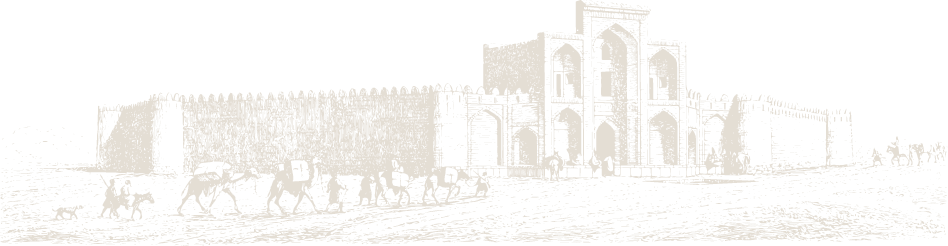
The Caravan Route — The Living Heart of Morocco
For those who seek a deeper sense of Morocco’s soul, the caravan route follows ancient trading paths through mountains, valleys, gorges, and desert landscapes. From Tangier, it moves through Chefchaouen and Volubilis, Meknes and Fez, then climbs into the Middle Atlas at Ifrane and Midelt before descending through the eastern High Atlas to the Ziz Valley and the sands near Merzouga.
From there, the road traces the edges of the Erg Chebbi dunes, the Todra and Dades Gorges, and the old caravan towns of the south — Tinghir, Boumalne, and Ouarzazate — before crossing the western High Atlas to Marrakech. Along the way rise the fortified ksar of Aït Benhaddou and the kasbahs that once guarded the trading routes between sub-Saharan Africa and the Mediterranean.
This route is not only Morocco’s geography but its story: imperial cities giving way to mountain villages, valleys to palm oases, oases to desert. The landscapes, traditions, and rhythms shift gradually — Morocco reveals itself in stages, as it has for centuries.
It requires more time — ideally nine or ten days — but rewards immeasurably. Travelling this way, as part of a private Morocco tour, you do not simply see Morocco; you feel it — in its scale, its people, its light, and its endless horizon.
Hybrid Journeys and Personal Paths
Of course, there are countless ways to combine these routes — perhaps travelling from Tangier to Fez and then turning west to Rabat, Casablanca, and Marrakech; or tracing only the northern arc through Tétouan, Chefchaouen, and Meknes.
Every traveller’s Morocco is different. Time, interests, and curiosity shape the path — but more important than distance is how you travel. Morocco is not a country to rush through. Between the cities lie landscapes, markets, and quiet encounters that become the true memory of the journey.
If time is limited, it is better to choose less and travel more deeply. In Morocco, the in-between moments are often the most beautiful of all.
Closing Thought
From Tangier’s sea air to Marrakech’s foothills, each road south reveals a Morocco of its own — coastal, historic, or desert-bound. Whether you seek cities, mountains, or the long silence of the desert, what stays with you is not the road you took, but how Morocco unfolded along the way.
Concise Route Summaries
1. Coastal Route — Cities and Sea (5–6 days)
Follow Morocco’s Atlantic coast from Tangier through Asilah, Rabat, Casablanca, and optionally Essaouira. Perfect for travellers drawn to modern city life, coastal light, cafés, galleries, and seaside charm.
2. Imperial North — Blue Mountains and Historic Cities (7+ days)
Weave through Chefchaouen’s blue alleys, then explore Meknes, Fez, Volubilis, and the Middle Atlas. A route rich in history, medinas, architecture, and Moroccan cultural heritage — ideal for travellers who love depth and tradition.
3. Caravan Route — The Living Heart of Morocco (9–10 days)
Follow ancient caravan paths through mountains, valleys, the Ziz Valley, Merzouga, and the kasbahs of Ouarzazate to Marrakech. Experience Morocco as a living country — from desert sands to imperial cities — where landscapes, traditions, and rhythms shift gradually.