Walled and wind-swept, Essaouira’s historic medina (old town centre) is a living record of centuries of trade, artistry, and cultural exchange. Passing through its gates, every street and alley bears the imprint of the past.
UNESCO recognised Essaouira as a World Heritage Site for the way Amazigh (Berber), Jewish, Arab, and Portuguese influences shaped its history, heritage, and continuing traditions. From 15th-century Portuguese fortifications and 18th century Moroccan medina to artisans crafting wood, textiles, and silver as their ancestors did, the city remains alive with continuity.
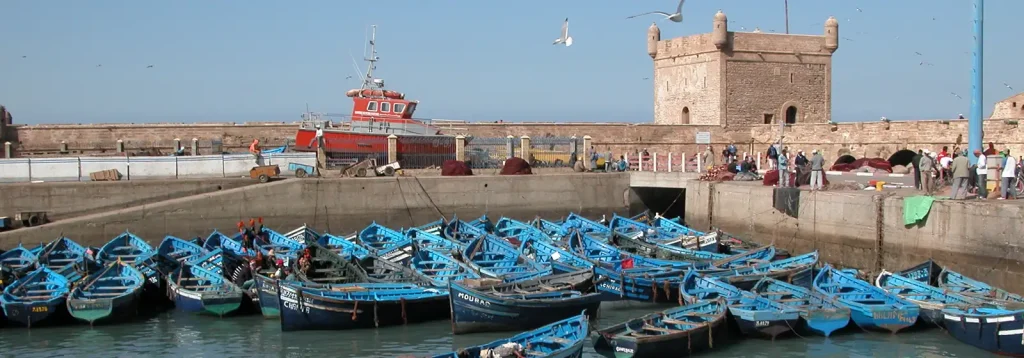
Fishermen haul the Atlantic’s catch and mend their nets, while the scent of spices and the sounds of work fill the souks and winding alleys. Skilled craftsmen transform Morocco’s unique thuya wood into boxes, frames, and furnishings, and generations of artisans continue the region’s traditions of textiles and silverwork. These are not museum pieces—they are part of daily life, techniques passed down for centuries.
Traces of Essaouira’s Jewish history remain in synagogues, former homes, and cemeteries, marking the contribution of a once-thriving community. Gnawa rhythms drift from open doors, and seasonal festivals bring musicians, dancers, and artisans into the streets. Galleries and workshops display contemporary painters, sculptors, and craftspeople, linking the city’s creative past to its vibrant present.
Essaouira’s enduring character comes from the balance between its people, their work, and centuries of culture. Visitors discover a coastal city that is alive and authentic, shaped by history but not trapped by it, where past and present coexist naturally.
Essaouira makes for a restful seaside stay, but for us at Berber Treasures, what makes it truly special is its story, its craft, its music—and, naturally, its fresh, delicious seafood. It’s a highlight of many Morocco tours, whether travelled to independently or as part of a private or small-group Morocco tour from Marrakech.